“`html
How to Make Hollandaise Sauce for Eggs Benedict
Mastering the art of making Hollandaise sauce is a key step in perfecting the classic eggs benedict. It may seem daunting at first, but with the right technique and tips, you can create a smooth, creamy sauce that’s both simple and delicious. In this blog post, we’ll guide you through an easy, no-fail Hollandaise sauce recipe, share tips for correcting any mishaps, and even explain how you can whip it up using an immersion blender. Whether you’re a seasoned cook or a beginner in the kitchen, these insights will help elevate your brunch game. Read on to discover how to expertly craft this iconic sauce and store it for later indulgence, plus get inspired by other classic sauce recipes.
Hollandaise Sauce (Easy & No-Fail)
Description
Hollandaise sauce is a rich, buttery sauce that is an essential part of any eggs benedict recipe. This versatile sauce adds a luxurious touch, whether you’re topping off poached eggs, asparagus, or simply adding a gourmet feel to any dish. Known for its velvety texture and tangy flavor, Hollandaise is a culinary classic that rewards patience and precision.
Creating a no-fail Hollandaise sauce means understanding the delicate process of emulsification and the ideal balance of its simple, yet powerful, ingredients. The key lies in achieving the right consistency, making sure the sauce isn’t too thick, while maintaining its signature silkiness. Our methodology ensures that anyone can master this without worry of the sauce splitting.
Video
Nothing beats a visual guide when it comes to mastering a sauce like Hollandaise. We’ve included a video below that takes you step-by-step through the recipe, providing visual cues on texture and consistency to perfect your sauce. Watch and follow along as our culinary expert demonstrates the process.
Video content is a powerful learning tool as it allows you to see the exact movements and changes to look for in the cooking process. Set aside a few minutes, watch the video for guidance, and make your next Hollandaise sauce attempt a guaranteed success.
Ingredients – US Customary/Metric 1x 2x 3x
At its core, Hollandaise sauce is composed of three main ingredients: egg yolks, butter, and lemon juice. Each ingredient plays a crucial role, creating the sauce’s distinct taste and texture. Here we lay out the quantities needed for small to large batches:
- Egg yolks: The base of the sauce, providing richness and the necessary thickness.
- Butter: Preferably unsalted, which gives the sauce its creamy quality.
- Lemon juice: Adds acidity, balancing the rich flavors with a hint of zest.
Note: Precise measurements are critical. Be sure to have a clear understanding whether you’re measuring for a single portion, doubling, or tripling the recipe.
Instructions
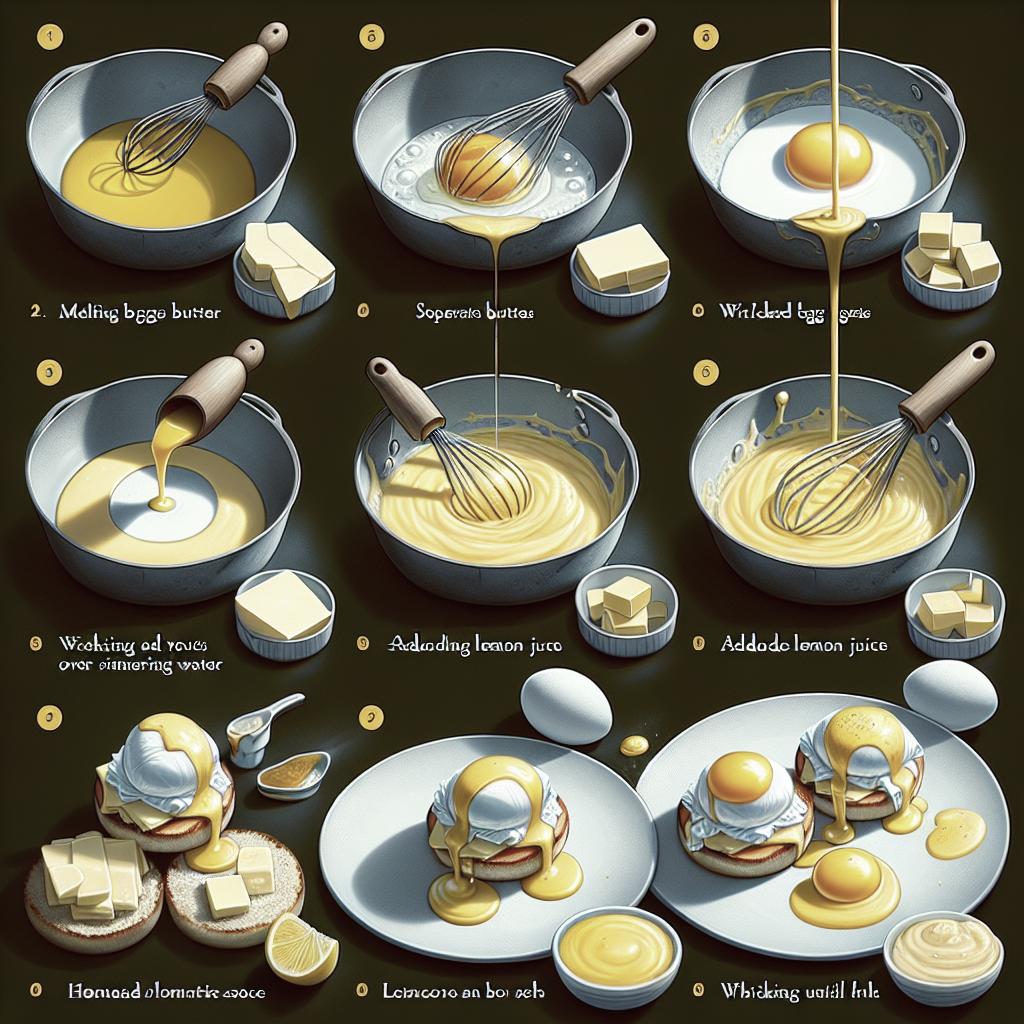
1. Begin by melting butter over low heat and keep it warm. In a separate bowl, whisk together the egg yolks and lemon juice until the mixture becomes thick and pale.
2. Place the bowl over a pot of gently simmering water, creating a makeshift double boiler. Continue to whisk the egg mixture, slowly drizzling in the melted butter, ensuring steady emulsification.
3. Once the butter is fully incorporated and the sauce is thickened to your liking, remove from heat. Season with salt to taste and serve immediately.
Lisa’s Tips
Here are some insights from culinary expert Lisa to ensure your Hollandaise sauce is flawless every time. Making sure your butter isn’t overheated is key; too hot and it will cook the eggs prematurely.
Another tip is to maintain a consistent whisking motion to prevent the sauce from splitting. Keep a steady hand and a calm pace to help control your technique, leading to a more uniform result.
Nutrition
Hollandaise sauce, while delicious, is calorie-dense due to its high butter content. It provides a substantial amount of fats, essential for flavor and texture. Portion control is advised if you’re mindful of calorie intake.
A standard serving size of Hollandaise sauce carries about 60 calories, mostly from fats. Despite this, it’s a source of vitamin A and an indulgent way to add depth to your meal.
Hollandaise Sauce Ingredients
The simplicity of Hollandaise is what makes it appealing. Using fresh, high-quality ingredients can significantly enhance the final product. From free-range egg yolks for richer flavor to organic lemons for a cleaner zest, choosing carefully ensures your sauce sings.
For the best results, always opt for unsalted European-style butter, which contains higher fat content, lending to a smoother texture. The balance between creamy and tangy is where the art lies, and it’s achieved through these carefully selected ingredients.
How To Make Hollandaise Sauce
Creating Hollandaise sauce is a dance between precision and patience. Begin by setting your mise en place—having all ingredients pre-measured enables smoother execution.
The incorporation of butter must be gradual; stream it into the yolks to form a stable emulsion. Temperature control is equally as vital, avoiding heat that’s too high, which can curdle the eggs, thus maintaining constant attention is crucial.
How To Fix Broken Hollandaise Sauce
If your sauce does break, don’t panic. You can often save it by adding a teaspoon of warm water or cream and whisking vigorously to bring it back together.
Another method is to start over with a fresh yolk, slowly integrating the broken sauce. This acts as a new base, re-emulsifying and salvaging your effort. The trick is to act fast and not let the split sauce cool too far or it will remain separated.
Can You Use an Immersion Blender?
Yes, using an immersion blender is a convenient way to make Hollandaise sauce and can simplify the emulsification process. The high-speed mixing can quickly combine ingredients, ensuring a consistent texture effortlessly.
For best results with an immersion blender, ensure your butter is at room temperature and add it in a slow stream, allowing the blender to do the work of incorporating air and achieving the desired thickness.
How To Store And Reheat Hollandaise Sauce
To store Hollandaise sauce, transfer it to an airtight container and refrigerate for up to two days. Reheating a delicate sauce like Hollandaise requires gentle heat; place the sauce in a heatproof bowl over simmering water and whisk until warmed through.
Avoid the microwave as it can unevenly reheat, causing the sauce to split. Consistent, gentle heat keeps the integrity of the sauce intact, ensuring it tastes as good as when freshly made.
More Classic Sauce Recipes
If you’re intrigued by the art of sauce-making, there are several other classic sauces worth exploring. Delve into the world of French cuisine with a rich Béchamel or a versatile Velouté.
For those seeking bold flavors, try your hand at a piquant Béarnaise or a creamy Mornay. Mastering these classic sauces can enhance your culinary repertoire, offering a multitude of ways to dazzle your palate and impress your guests.
Lessons Learned
| Aspect | Key Points |
|---|---|
| Key Ingredients | Egg yolks, butter, lemon juice |
| Techniques | Emulsification, slow butter incorporation |
| Tools | Whisk, double boiler, possible immersion blender |
| Troubleshooting | Add warm water or fresh yolk to fix broken sauce |
| Storage | Store in airtight container, reheat gently |
| Reheating | Use gentle double boiler heat, stir consistently |
| Additional Sauces | Béchamel, Velouté, Béarnaise, Mornay |
“`