“`html
How to Make the Perfect Omelet
Omelettes are a cornerstone of simple yet satisfying cuisine. Whether you’re a novice in the kitchen or an experienced cook, mastering the art of making a perfect omelette is a skill worth honing. This blog post will guide you through the process, from choosing the right pan to selecting the best ingredients, ensuring your omelette is fluffy, flavorful, and fulfilling. We will explore the differences between French and American omelettes, provide step-by-step instructions, and even include a video tutorial. Read on for practical tips and be ready to delight in your culinary creation!
How To Make An Omelette
French vs American Omelettes
The first step in perfecting your omelette is understanding the distinction between French and American styles. The French omelette is known for its soft and tender texture, often rolled or folded and served with the center still slightly creamy. To achieve this, the French method requires a gentle cooking process over low heat, with constant stirring.
In contrast, the American omelette is typically more robust, allowing for a firmer texture. It is often cooked over a slightly higher heat and filled with a variety of toppings like cheese, vegetables, and meats. This version is usually folded in half, making it heartier and more substantial. Depending on your preference, you might opt for the elegance of a French omelette or the boldness of an American one.
The Omelette Pan
Choosing the right pan is crucial for omelette success. A non-stick skillet is highly recommended, as it allows for easy flipping and folding without the omelette sticking to the pan. Ideally, your pan should have sloped sides, which help in rolling or folding the omelette with ease.
Size is also an important factor; an 8 to 10-inch pan is perfect for a two to three egg omelette. The right pan will not only simplify the cooking process but also enhance the overall quality of your omelette, providing a uniform texture and the perfect level of doneness.
What You’ll Need To Make An Omelette
Ingredients
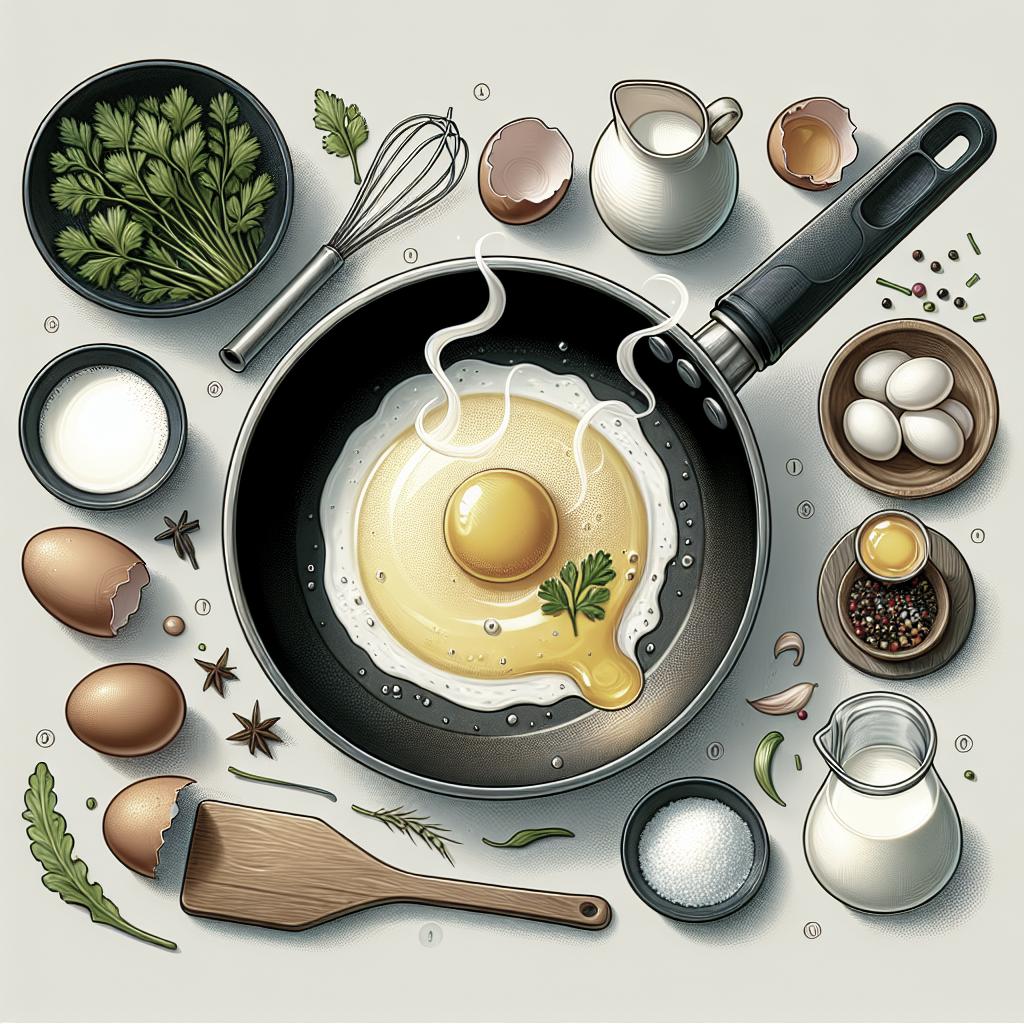
Your ingredients will depend on whether you’re opting for a plain omelette or one with delicious fillings. At the most basic level, you will need eggs, butter or oil for cooking, and salt and pepper for seasoning. For fillings, you might consider cheese, spinach, mushrooms, diced ham, or tomatoes.
It’s important to prepare all your ingredients before you start cooking. This ensures that your omelette cooks evenly, allowing you to focus on technique rather than preparation while your pan is hot.
Instructions
Begin by cracking your eggs into a bowl and whisking them until they are homogenous. Season with a pinch of salt and pepper. Heat your non-stick skillet over medium-low heat and add a small knob of butter or a splash of oil, letting it melt completely and coat the pan’s surface.
Pour in the beaten eggs and immediately begin gently stirring with a spatula, pulling the cooked edges towards the center and allowing the uncooked eggs to fill in. Once the omelette is mostly set but still slightly runny on top, add any fillings on one half before folding the omelette over.
Step-by-Step Instructions
1. Crack 2-3 eggs into a bowl, adding a pinch of salt and pepper, and whisk until smooth.
2. Preheat your non-stick pan over medium-low heat and add butter to coat it evenly.
3. Pour the beaten eggs into the pan, stirring gently to ensure even cooking and prevent sticking.
4. When the eggs are almost set but still creamy on top, add your desired fillings on one half.
5. Use a spatula to fold the omelette in half, covering the fillings, and cook until fully set.
6. Transfer to a plate, garnish with fresh herbs if desired, and serve warm.
Video Tutorial
If you prefer visual guidance, check out the video tutorial below for a demonstration of making the perfect omelette. Watching an expert can offer additional tips on technique and timing, ensuring your omelette-making process goes smoothly.
[Embed Video Tutorial Link Here]
Nutrition Information
Omelettes are not only delicious but also packed with nutrients. They are rich in protein, healthy fats, vitamins, and minerals. A simple two-egg omelette with a small cheese portion contains approximately 250-300 calories, depending on the size of the eggs and cheese.
While eggs provide a great source of high-quality protein, additional ingredients like vegetables can boost the fiber content and make it a more rounded meal. Tailor your omelette to your dietary needs and preferences.
Gluten-Free Adaptable Note
The classic omelette is naturally gluten-free, making it an excellent option for those with gluten sensitivities or celiac disease. Ensure that any fillings or toppings you choose are also gluten-free, such as certified gluten-free cheese or vegetables.
Be cautious about cross-contamination in shared cooking spaces, ensuring all utensils and surfaces are clean and free from gluten-containing residues.
You may also like
See more recipes:
Feel free to explore these other delectable recipes, which can offer variety and complement a breakfast or brunch spread:
Did you make this recipe?
Your feedback is essential to us! If you tried this omelette recipe and loved it, share your experience with us. Upload a picture of your creation and let us know any variations you made. We’re excited to hear how your perfect omelette turned out!
Comments
We encourage you to leave comments below. Whether you have tips, questions, or just want to share your thoughts on omelette-making, your input is valuable to our community. Let’s engage and share what makes our omelette experiences unique.
Add a Comment Cancel reply
Your email address will not be published. Required fields are marked *
| Section | Content |
|---|---|
| French vs American Omelettes | Explaining the differences in texture and cooking techniques. |
| The Omelette Pan | Importance of using a non-stick pan with sloped sides. |
| Ingredients | Essential ingredients for a basic omelette and popular fillings. |
| Instructions | Step-by-step process for making a perfect omelette. |
| Video Tutorial | Link to a visual cooking guide. |
| Nutrition Information | Calorie count and nutritional benefits of an omelette. |
| Gluten-Free Note | Guidance on keeping the omelette gluten-free. |
| You May Also Like | Additional recipe suggestions for breakfast or brunch. |
| Did You Make This Recipe? | Encouragement to share feedback and photos of the cooked omelette. |
“`