“`html
Mastering the Art of Caramelizing Onions
Caramelizing onions is a fundamental cooking technique that adds depth and rich flavor to various dishes. This process involves slowly cooking onions until they’re golden brown, sweet, and savory. In this blog post, we’ll guide you through the step-by-step process of caramelizing onions on your stovetop, from choosing the right type of onion to perfecting the technique using either butter or oil. Additionally, we’ll discuss the ideal cooking conditions and times necessary for achieving the best results. Finally, we’ll explore creative ways to incorporate caramelized onions into your favorite recipes. Whether you’re a seasoned cook or a novice in the kitchen, this comprehensive guide will help you master this versatile culinary skill.
How to Caramelize Onions on Your Stovetop
Ingredients:
To get started on your caramelizing journey, you’ll need just a few simple ingredients: onions, butter or oil, and a pinch of salt. These basic components transform the humble onion into a luxurious ingredient that elevates any dish.
For variations in flavor, you can also experiment by adding a touch of sugar, balsamic vinegar, or even a splash of wine to the mix. However, for traditional caramelized onions, the core ingredients listed above are all you need.
1. Choose Your Onions
The type of onion you select significantly impacts the final taste. Yellow onions are popular due to their balance of sweetness and pungency, making them a go-to choice for many chefs. Alternatively, Vidalia or Maui onions, known for their sweetness, can create an even more robust caramelized flavor.
If you’re aiming for a more unique taste, red onions offer a subtler, sweeter flavor, while white onions deliver a sharper taste profile. Selecting the right onion can truly make a difference, so consider your final dish’s flavor profile when making your choice.
2. Slice Your Onion
When slicing your onions, consistency is key. Ensure that each slice is of uniform thickness to promote even cooking. Typically, 1/8 to 1/4 inch thick slices work best, allowing the onions to develop their signature golden hue and sweet flavor without becoming mushy.
Consider using a mandoline slicer for perfect uniformity, especially if you’re preparing a large batch. Remember that thinner slices will caramelize quicker, while thicker slices might take longer to reach that perfect soft and sweet consistency.
3. Melt Butter in a Skillet
Place your skillet over medium heat and add roughly 2 tablespoons of butter. Allow the butter to melt evenly, swirling the pan to coat the bottom. The butter plays a vital role, adding richness and helping the onions achieve a soft, creamy texture.
If you prefer a non-dairy or lighter alternative, olive oil or a mix of oil and butter can be used. This combination provides a slight variation in flavor while still facilitating the caramelization process effectively.
4. Add the Onions and a Pinch of Salt
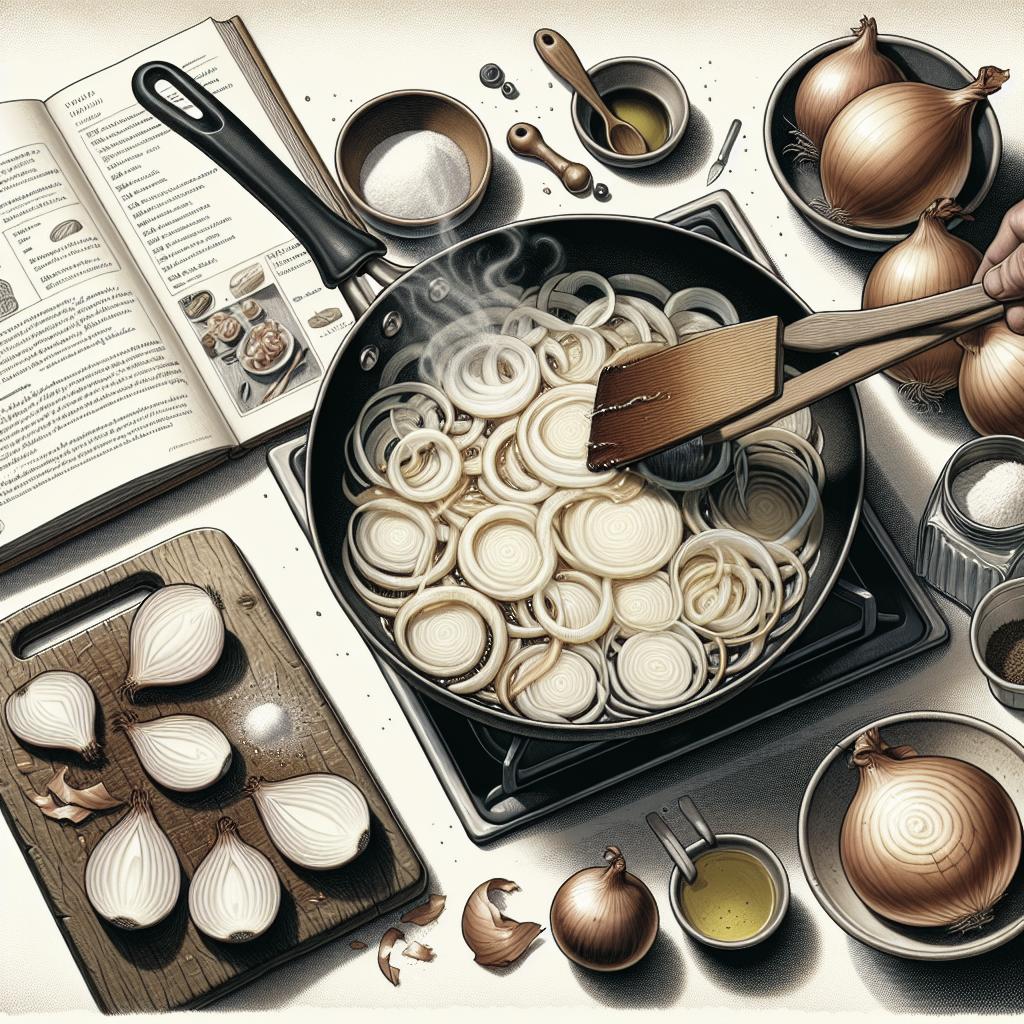
Carefully scatter the onion slices across the skillet, ensuring they are evenly distributed for uniform cooking. Add a pinch of salt, which helps draw out the natural moisture and sweetness from the onions, initiating the caramelizing process.
As the onions begin to cook, you’ll need to stir them occasionally. This ensures they cook evenly and don’t stick to the pan. Patience is key during this step; caramelization is a slow process, but the results are worth the wait.
5. Deglaze
As the onions progress in their caramelizing process, they may leave some browned bits or “fond” on the skillet’s bottom. Deglazing the pan with a small amount of water, broth, or wine helps dissolve these flavorful deposits back into the onions.
This step adds complexity and enhances the overall taste of the caramelized onions. Add the liquid of choice—just enough to cover the skillet’s bottom briefly—and continue cooking until the onions absorb it, achieving a beautiful golden consistency.
Do You Use Oil or Butter to Caramelize Onions?
The choice between oil or butter primarily depends on personal preference and dietary constraints. Butter imparts a richer, more decadent flavor to the onions, while oil results in a lighter dish.
Some cooks prefer a combination of both, leveraging the benefits of each. Butter offers deep flavor and browning qualities, whereas oil contributes to a higher smoke point, preventing possible burning during prolonged cooking.
Do You Caramelize Onions on Low or High Heat?
Low heat is the preferred setting for perfect caramelization. Cooking onions too quickly or on high heat risks burning them, resulting in uneven cooking and a bitter flavor.
Patience is crucial here. Caramelizing onions low and slow ensures gradual sugar breakdown, achieving a sweet, deep flavor profile with a beautifully tender texture.
How Much Time Does It Take to Caramelize Onions?
The caramelization process typically takes about 30 to 45 minutes, depending on the quantity and thickness of your onions, as well as your desired level of caramelization.
Remember, good things take time. Rushing this process can lead to improperly cooked onions, lacking the complexity and sweetness that properly caramelized onions are known for.
How to Use Caramelized Onions
Caramelized onions are a versatile ingredient that can transform numerous dishes. They make a delightful topping for pizzas, burgers, and sandwiches, offering a sweet, umami-rich addition to each bite.
They also blend beautifully into sauces, soups, and stews, adding a sweet depth of flavor. For a creative twist, try using caramelized onions in tarts, dips, or as a savory condiment for cheese and charcuterie boards.
Next Steps: Summary of Caramelizing Onion Techniques
| Step | Details |
|---|---|
| Choosing Onions | Select between yellow, Vidalia, red, or white onions depending on desired sweetness and flavor. |
| Slicing Onions | Ensure uniformity by slicing onions 1/8 to 1/4 inch thick for even caramelization. |
| Melt Butter | Use butter or a butter-oil combination for richness and to facilitate the caramelization process. |
| Add Onions and Salt | Add a pinch of salt with onions to extract moisture and sweetness. |
| Deglazing | Deglaze with water, broth, or wine to incorporate flavorful residue back into the dish. |
| Cooking Method | Low heat ensures gradual sugar breakdown, offering sweet, tender results over 30-45 minutes. |
| Utilization | Perfect for topping pizzas/burgers, enriching soups, or enhancing dishes with umami-rich sweetness. |
“`